Explore Beijing / Seeing a Concert in Beijing as a Foreigner: Worker's Gymnasium vs National Stadium, Entry Rules and Merch
Seeing a Concert in Beijing as a Foreigner: Worker's Gymnasium vs National Stadium, Entry Rules and Merch
A practical guide to attending concerts and stadium shows in Beijing as a first-time Western visitor — venue differences, real-name ticketing rules, getting in, and buying merch.
6 min read · KOULING's Beijing Travel Guide
Catching a live show is one of the best ways to feel Beijing's energy after dark. But buying tickets and getting into a venue as a foreigner works differently than back home: most events use real-name ticketing tied to your passport, and entry can be slow if you're not prepared. Here's what to expect at two of the city's most common show venues — the Worker's Gymnasium and the National Stadium (Bird's Nest) — plus practical entry and merch advice.
The Two Venues at a Glance
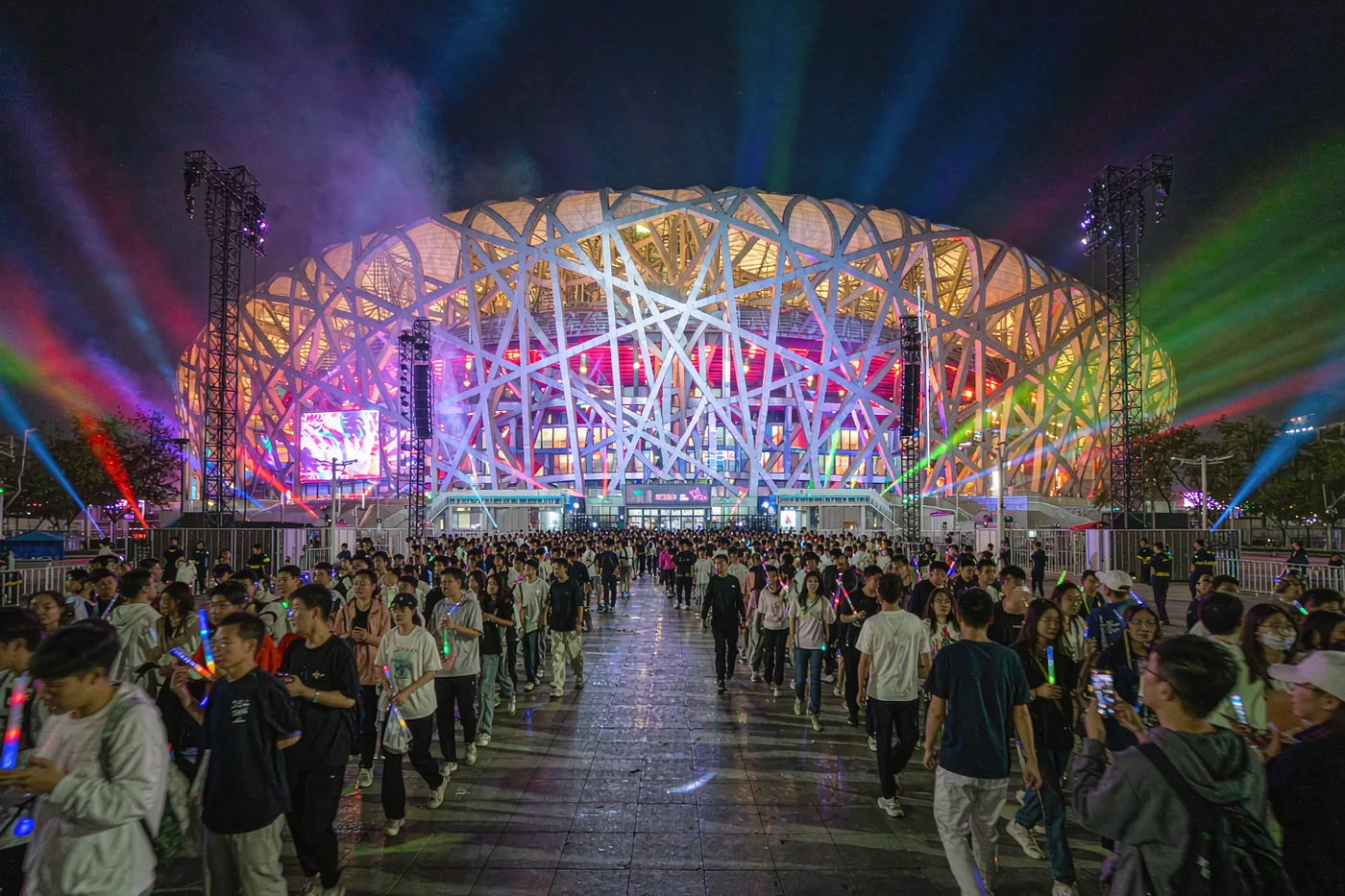
The Worker's Gymnasium is an indoor arena in the city's east, hosting mid-size concerts (roughly 10,000+ capacity) with good acoustics and easy metro access. The National Stadium, known as the Bird's Nest from the 2008 Olympics, is an open-air stadium in Olympic Green for stadium-scale shows — bigger crowds, bigger production, and weather exposure. Choose by scale: if you want intimacy and comfort, the gymnasium wins; if you want spectacle, the Bird's Nest delivers.
Worker's Gymnasium — Indoor, east-central Beijing, mid-size shows, generally easier and faster entry. Confirm exact address and nearest station for your event [verify before travel].
National Stadium (Bird's Nest) — Open-air, Olympic Park area, huge capacities. Expect security lines and walking distances; dress for the season since you'll queue outdoors [verify before travel].
Buying Tickets: Real-Name Rules Are the Key Thing
Most concerts in China use real-name registration: the ticket is linked to the passport number of the attendee, and staff may check your physical passport at the gate. Never buy a ticket registered under someone else's name — you can be refused entry. Tickets are sold via Chinese platforms like Damai or Maoyan, which typically require a Chinese phone number and local payment methods, so many foreigners book through official international resellers or ask a Chinese-speaking friend. Verify which platform your event uses and whether foreign passports can register directly [verify before travel].
Use your own passport — Register the ticket in your name with your passport number exactly as printed. Bring the physical passport to the show — photos may not be accepted.
Buy from official channels — Scalped or second-hand real-name tickets often won't work for foreigners. Expect top acts to sell out in minutes; join official presales where possible [verify before travel].
Budget — Typical face-value tickets for major concerts range from roughly CNY 380–1,600 (about US$55–225) depending on act and seating; premium or standing zones cost more [verify before travel].
Getting In: Security, Bags and Phone Tickets
Security at Chinese concerts is thorough: expect bag checks, metal detectors, and possible ID checks. Arrive 60–90 minutes before showtime for a stadium show, 45–60 for an arena. Screenshots of your e-ticket may not suffice if the app requires an in-app pass — download the ticketing app and log in before you arrive, and bring a power bank. Professional cameras, umbrellas, glass bottles, and large bags are usually prohibited; a small bag and your phone are all you need.
Bring your physical passport — For real-name events, staff may match face, ticket, and document. No passport usually means no entry.
Charge your phone — Your ticket is often in an app, and you'll need your phone to find people afterward. Portable chargers are widely sold near venues.
Cash and payment apps — Merch stands may prefer mobile payment (Alipay/WeChat Pay); most now accept international cards linked to these apps. Carry a little cash (CNY 100–200 / about US$15–30) as backup [verify before travel].
Merch: Lines, Sizes and Payment
Tour merchandise is usually sold at designated stands inside or just outside the venue, opening around the same time as gates — often 1–2 hours before the show. Popular items (tour tees, light sticks) can sell out early or sell out entirely before the encore, so buy before the show if you care about size availability. Sizes tend to run smaller than Western sizing; when in doubt, size up. Receipts may not be issued, and refunds are rare, so check the item before you pay.
Buy early, not at the encore — The longest lines form right after gates open; the most popular sizes and items vanish first [verify before travel].
Light sticks and glow items — For C-pop and K-pop shows, official light sticks may be sold separately; unofficial vendors outside sell cheaper versions that may not sync with the show.
Typical prices — T-shirts commonly run CNY 150–400 (about US$20–55); light sticks CNY 100–300 (about US$15–45), depending on the tour [verify before travel].
Worker's Gymnasium (工人体育馆)
A classic indoor arena in Chaoyang district that has hosted concerts for decades. It's intimate enough that even mid-tier seats feel close to the stage, and being indoors means no weather worries. Bars, snack stalls and taxis cluster around the surrounding Sanlitun–Chaoyangmen area, which is handy for a pre- or post-show meal.
Metro
Accessible via the Beijing Subway; several lines serve the surrounding Chaoyang area — confirm the current nearest station and line for your event [verify before travel].
Opening hours
Open on event days; gates typically open 1–2 hours before showtime [verify before travel].
Tickets
Via official ticketing platforms with real-name passport registration; roughly CNY 380–1,600 (about US$55–225) for major shows [verify before travel].
How long
Concerts typically run 2–3 hours, including support acts.
National Stadium — Bird's Nest (国家体育场)
The iconic 2008 Olympic stadium in Olympic Green, used for stadium-scale concerts and festivals. Expect dramatic open-air production, huge crowds, and long security queues — build in extra time. After the show, tens of thousands leave at once, so consider waiting 20–30 minutes or walking to a further metro station to avoid crushes.
Metro
Olympic Green stations on the Beijing Subway serve the area; confirm the current best line and exit for your gate [verify before travel].
Opening hours
Open on event days; gates usually open about 2 hours before showtime [verify before travel].
Tickets
Real-name ticketing via official platforms; stadium show prices vary widely by act, roughly CNY 380–2,000 (about US$55–290) [verify before travel].
How long
Allow 4+ hours door-to-door including entry queues and post-show crowd dispersal.
Foreigner-Specific Tips for Show Night
Screenshot everything, but don't rely on screenshots — Save your order confirmation, seat map, and venue address offline — but if your ticket lives in an app, use the app at the gate.
Set up payments before the show — Link your international card to Alipay or WeChat Pay in advance so merch and snack purchases don't fail at a crowded stand [verify before travel].
Plan your ride home — The subway closes around 23:00 or later on some lines; big shows often end after the last convenient train, so check closing times and pre-book a ride-hail (Didi) [verify before travel].
Eat before you queue — Venue food is limited and lines are long. Have dinner near the venue beforehand; around Worker's Gymnasium, the nearby dining districts make this easy.
Weather for outdoor shows — Bird's Nest events are open-air: bring layers in spring/autumn (roughly 10–20°C / 50–68°F evenings) and a small fan or water plan in summer heat [verify before travel].