Explore Beijing / Beijing's Classical Gardens Beyond the Summer Palace: Beihai, Zhongshan, Ritan and What Each Is Worth
Beijing's Classical Gardens Beyond the Summer Palace: Beihai, Zhongshan, Ritan and What Each Is Worth
The Summer Palace gets the crowds, but Beijing's quieter imperial gardens—Beihai, Zhongshan and Ritan—offer lake views, ancient trees and local life at a fraction of the effort. Here's what each is actually worth your time for.
5 min read · KOULING's Beijing Travel Guide
Most first-time visitors hear 'Beijing gardens' and picture the Summer Palace—a UNESCO site that's absolutely worth a half-day, but also a 15 km (9 mile) trek to the northwest suburbs, complete with tour groups. The good news: Beijing's centre is stitched with classical gardens that are cheaper, closer and far calmer. Beihai is the showstopper with its white dagoba on a lake; Zhongshan is a refined former imperial altar steps from the Forbidden City; Ritan is a leafy neighbourhood park with a genuinely ancient altar at its heart. You can comfortably see all three across two relaxed days, or pick one based on what else you're doing that day.
Quick verdict: which garden is worth it?
All three are inexpensive and easy to reach, but they serve different moods. If you only have time for one, make it Beihai—it's the most visually spectacular and pairs naturally with the Forbidden City and Jingshan Park next door. Zhongshan works best as a breather between big sights, and Ritan is worth it mainly if you're staying nearby or want to see how ordinary Beijingers use a park: tai chi, chess, ballroom dancing.
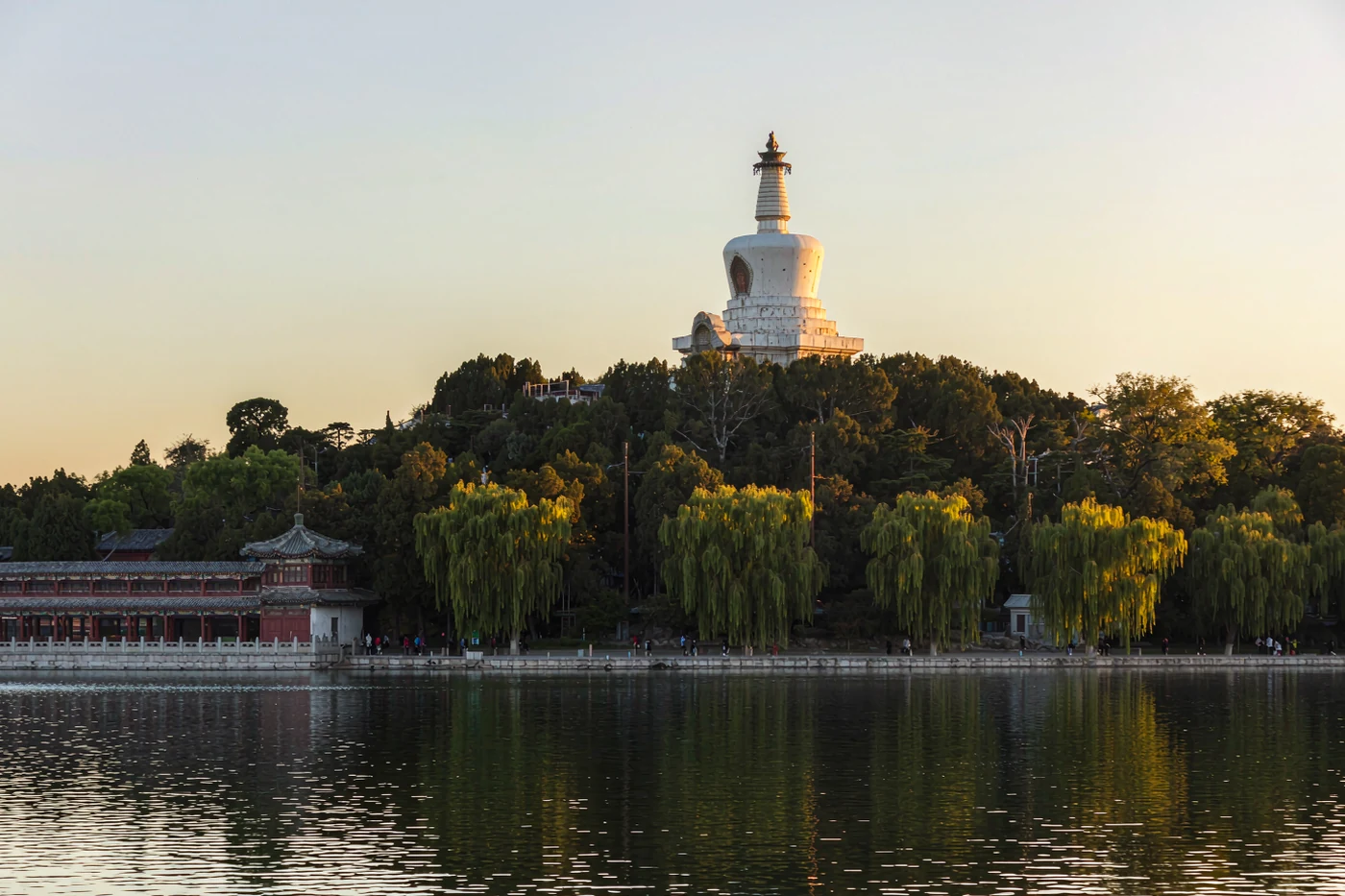
Beihai Park — Best overall. Iconic white dagoba, boat rentals, imperial-scale lake views. Half a day, well spent.
Zhongshan Park — Best add-on. Small, serene, 700-year-old cypresses, right beside the Forbidden City's west gate—zero extra travel required.
Ritan Park — Best for atmosphere. A Ming-dynasty sun-worship altar wrapped in a leafy local park; low on tourists, high on daily life.
Beihai Park (北海公园)
One of the oldest surviving imperial gardens in China, laid out over 1,000 years ago. The centrepiece is a vast lake dominated by the White Dagoba on Jade Flower Island, reached by crossing an arched stone bridge. Walk the perimeter in an hour or rent a pedal boat in season; the northern shore's Nine-Dragon Screen and quiet rock gardens reward a slower pace. The eastern gate drops you minutes from Jingshan Park, where a short climb gives you the classic panorama of the Forbidden City rooftops—pair the two.
Metro
Closest to the west or north gates: Line 6 to Beihai North station; confirm current station exits [verify before travel].
Opening hours
Generally opens early morning; park gates and inner sights close earlier in winter [verify before travel].
Tickets
Low single-digit CNY entry (roughly US$1–3); the dagoba area and boat rides cost extra [verify before travel].
How long
2–4 hours, more if you add Jingshan Park.
Zhongshan Park (中山公园)
Directly west of the Forbidden City, this compact garden was once the imperial Altar of Land and Grain, where emperors honoured the soil and harvest. Today it's a refined rectangle of pavilions, peony beds and towering ancient cypresses—some said to be centuries older than the walls around them. It's the easiest garden visit in Beijing: you'll likely be walking past it anyway on your Forbidden City day, and it's the perfect 45-minute reset between crowds. Don't miss Lai Jin Yu Xuan, a quiet teahouse-café in a former imperial pavilion.
Metro
Walkable from Tiananmen East or Tiananmen West on Line 1; security checks apply around Tiananmen Square, so carry your passport [verify before travel].
Opening hours
Daytime hours year-round; earlier closing in winter [verify before travel].
Tickets
Very cheap, low single-digit CNY (around US$0.50–2) [verify before travel].
How long
45–90 minutes.
Ritan Park (日坛公园)
The Temple of the Sun, built in the 1530s for Ming-dynasty emperors to make offerings to the sun god, now sits quietly inside a leafy park in Beijing's Chaoyang district. The stone altar itself is simple; the pleasure is in the surroundings—ancient trees, a small lake, and locals playing chess, dancing and flying kites. Foreign embassies cluster nearby, so you'll also find good coffee and international restaurants a short walk away. It never feels like a checklist sight, which is exactly the point.
Metro
Roughly a 15–20 minute walk from Yong'anli station on Line 1; confirm current exits and walking route [verify before travel].
Opening hours
Open daily from early morning into the evening; the altar enclosure may have shorter hours [verify before travel].
Tickets
Usually free or a nominal CNY fee (about US$0.50–2) [verify before travel].
How long
1–2 hours.
A perfect garden day: Beihai and Zhongshan
08:30
Enter Beihai Park from the east or south gateArrive early for soft light on the lake and thinner crowds; grab a coffee near the gate first.
09:00
Cross to Jade Flower Island and climb to the White DagobaWorth the extra small ticket for lake panoramas; stairs are moderate [verify before travel].
10:30
Walk the northern shore: Nine-Dragon Screen and rock gardensThe quietest, most atmospheric stretch of the park.
12:00
Lunch near Shichahai or exit east toward JingshanNanluoguxiang hutong lanes are a short walk away for casual eats.
14:00
Zhongshan ParkEnter through the gate just west of the Forbidden City; find a seat under the ancient cypresses.
15:00
Tea at Lai Jin Yu Xuan teahouseA slow finish inside the park; expect simple tea and snacks at café prices.
Practical tips for garden visits
Book and verify ahead — Entry prices, hours and any reservation requirements change seasonally—check official listings before you go [verify before travel].
Carry your passport — You'll need ID for Tiananmen-area security checks, and some parks use passport-based ticketing for foreign visitors.
Have mobile payment ready — Cash works but many kiosks and boat rentals prefer Alipay or WeChat Pay; set these up with a foreign card before arrival [verify before travel].
Go early or late — Gardens are at their best 8–10 am, when locals exercise and light is soft. Midday weekends get busy even at Ritan.
Winter visits — Beijing winters are cold (often below 0 °C / 32 °F), but frozen lakes and snow on the dagoba are photogenic—just dress in layers.