A practical guide to Beijing's free public libraries, paid study cafés and quiet workspaces — including what ID to bring, how to get a reader's card, and where to settle in for a long session.
If you're staying in Beijing for more than a few days — a semester, a work stint, a slow month of travel — you'll eventually need somewhere genuinely quiet to read, study or work. The good news: Beijing has superb public libraries with free reading rooms, a huge number of paid study cafés (自习咖啡馆 or 自习室), and cafés that tolerate laptops. The catch: most venues are built around Chinese ID (身份证), so as a foreigner you'll usually use your passport, and some services need a little patience or a Chinese phone number. This guide walks you through what to expect and what to bring.
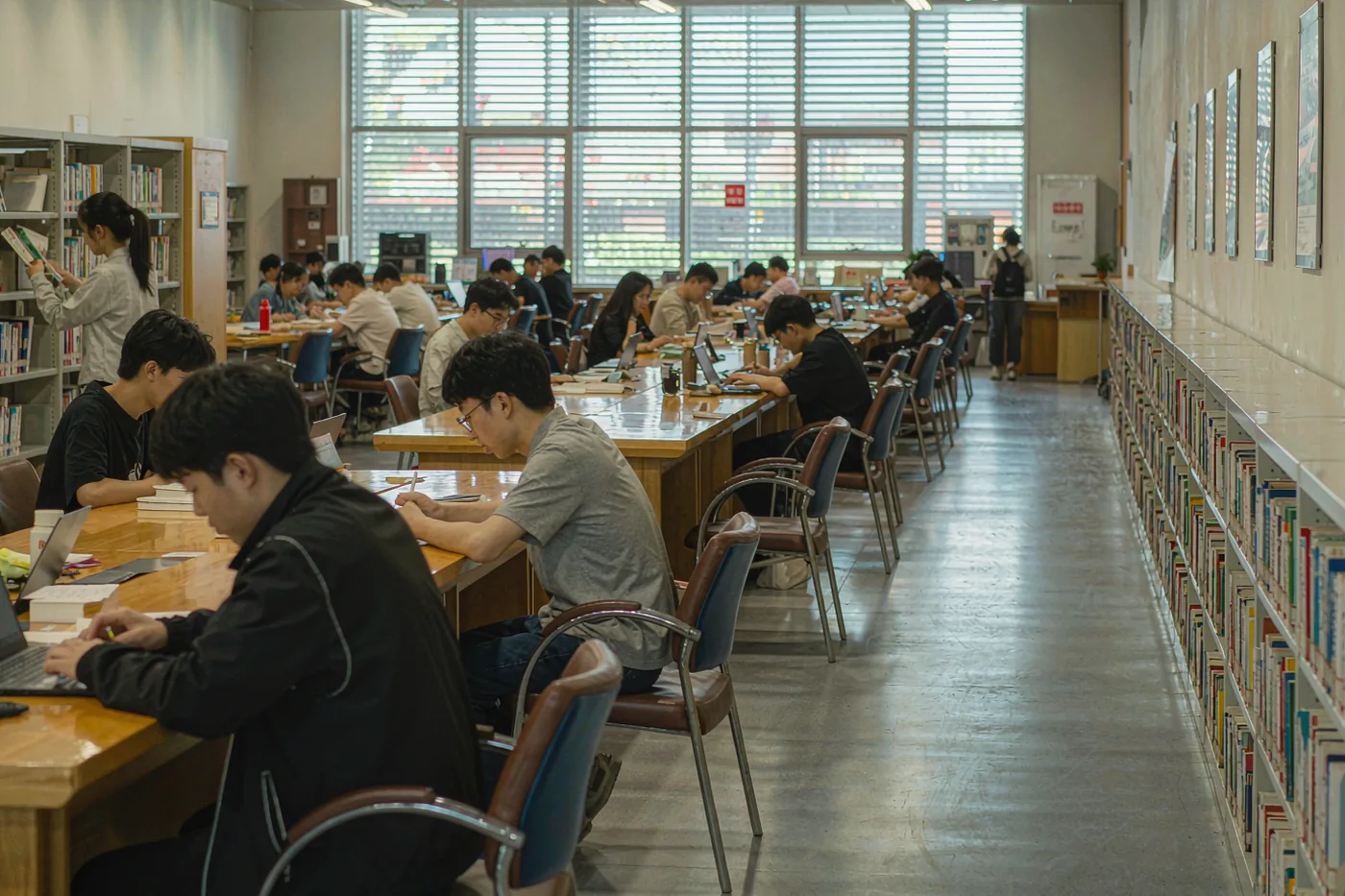
Beijing's public libraries are free to enter and their reading rooms are among the quietest, cheapest workspaces in the city. Entry to the reading areas typically requires passing a security check and may require registering at the desk or with an automated machine — bring your passport every time. To borrow books (rather than just read on-site), you'll normally need a reader's card (读者证), which foreigners can usually obtain with a passport; some branches also want a Chinese phone number, and deposits or card tiers can vary, so confirm current requirements before you go [verify before travel]. Many libraries now use seat-booking apps or WeChat mini-programs for popular study areas — staff will usually help, but having a Chinese colleague or hotel front desk assist with the app makes the first visit much smoother. Wi-Fi is generally available but may require a Chinese mobile number to register.
Beijing has a thriving paid self-study room (自习室) industry: individual booths with desk lamps, power outlets, lockers and strict silence, typically costing around CNY 20–50 (US$3–7) per session or CNY 300–800 (US$42–112) per month depending on location and amenities [verify before travel]. Many operate through WeChat mini-programs where you book a specific seat and time slot; some are walk-in friendly, especially outside exam season. Study cafés are a softer option — a café where laptops are welcome, noise is low and staff won't rush you; budget the price of a drink (CNY 25–45 / US$3.50–6.50) for an afternoon [verify before travel]. Payment is nearly always via WeChat Pay or Alipay, so set both up with your foreign card before you go — cash acceptance is patchy [verify before travel].
If you'd rather not deal with apps and registrations, bookstore cafés are a reliable middle ground. Large bookstores often have in-store cafés with tables, outlets and a studious atmosphere — quieter than ordinary cafés, no booking needed, and the cost is just your coffee. Chain and independent cafés vary wildly: some welcome laptop workers all day, others post no-laptop signs on weekends. Look for places with larger tables and mid-afternoon lulls. Finally, don't overlook your own hotel: a room with good soundproofing and a real desk is often the most productive 'workspace' you have, especially for video calls that a public library can't host.
China's national library near Baishiqiao, north-west of central Beijing, is enormous, quiet and free to enter with a passport. The vast reading rooms are the gold standard for serious study; hot water stations are available and you'll see locals camped out with laptops and textbooks for whole days. Registering for borrowing privileges as a foreigner is possible but rules vary — check the current process on-site or online before visiting [verify before travel]. Bags go into free lockers at the entrance.
A major public library in the southeast of the city near Guomao, known for a friendlier, more accessible atmosphere than the National Library and strong collections in English as well. Reading rooms are free with passport registration; foreign visitors have historically found the staff helpful with the reader's card process [verify before travel]. Good option if you're based east or south of the centre.
Every Beijing district runs its own public library — Dongcheng, Xicheng, Chaoyang, Haidian and others — usually free with passport entry, far less crowded than the National Library, and often within walking distance of your accommodation. Search the map for '图书馆' (library) near your hotel. For paid study rooms, search '自习室' on Dianping or WeChat mini-programs; expect individual booths, quiet-hour rules and online seat booking, with prices around CNY 20–50 (US$3–7) per session [verify before travel].