Explore Beijing / Arriving in Beijing by Train from Mongolia: K23/K24, Tickets and the Erlian Border
Arriving in Beijing by Train from Mongolia: K23/K24, Tickets and the Erlian Border
China-Mongolia rail is back: one weekly train each way. What it costs, how paper-only tickets are sold, and what happens during the five-hour border stop at Erlian.
7 min read · KOULING's Beijing Travel Guide
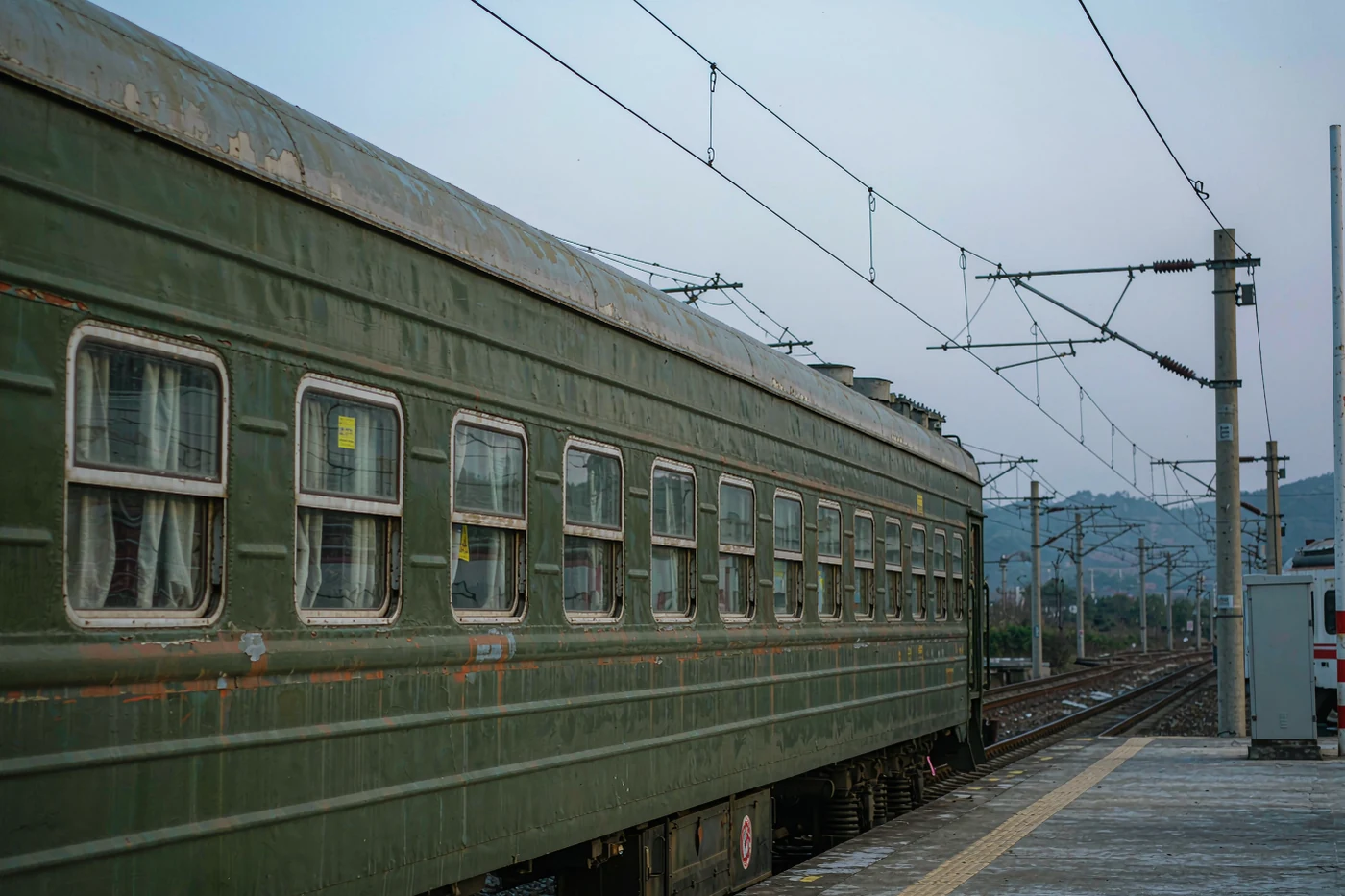
Most foreign visitors arrive in Beijing by air, but one of the world's great rail routes lands you here overland: the Trans-Mongolian line from Ulaanbaatar, crossing the Gobi Desert and the border at Erlian. The famous through-cars to Moscow (trains K3/K4) are still suspended, but the Beijing-Ulaanbaatar train itself returned in June 2025 after a five-year pause. It now runs weekly in each direction, takes about 31 hours, and delivers you to Beijing Station - not an airport 40 minutes out of town. This guide covers what actually runs, how the paper-only ticketing works, what happens during the long border stop, and the visa details that regularly catch travelers out.
What actually runs in 2026
International rail out of Beijing is much thinner than the guidebooks suggest. As of late 2026, this is the honest list.
K23 / K24 - Beijing and Ulaanbaatar — The one that matters. Jointly run by China Railway and Mongolian Railways, resumed June 2025, roughly weekly in each direction, about 31 hours end to end.
K3 / K4 - Beijing and Moscow — The legendary Trans-Mongolian through train. Suspended since 2020 with no confirmed restart - if an article still recommends it, the article is out of date.
4654 / 33 - Hohhot and Ulaanbaatar — A weekly alternative that starts from Inner Mongolia instead of Beijing (currently Mondays and Fridays) [verify].
K27 / K28 - Beijing and Pyongyang — Resumed in March 2026, but tickets are sold only through authorized agencies as part of organized tours.
The timetable: 31 hours, one border
Both directions share the same routing: Beijing, Jining South, Erlian (the Chinese border town), Dzamyn-Uud (the Mongolian one), then the long Gobi run into Ulaanbaatar - 1,553 km in total. The weekly departure day has changed before, so reconfirm it close to booking.
K23, Beijing to Ulaanbaatar — Departs 07:27, arrives 14:35 the next day. Currently every Saturday - it ran on Tuesdays until May 2026 [verify].
K24, Ulaanbaatar to Beijing — Departs 07:18, arrives Beijing Station 14:35 the next day. Currently on Thursdays [verify].
Erlian, the Chinese border — The train stops here for close to five hours: Chinese exit formalities plus the bogie change.
Dzamyn-Uud, the Mongolian border — A 75-minute stop for Mongolian entry stamping before the train rolls on.
The border night at Erlian, hour by hour
20:18
Arrive ErlianThe train stops for close to five hours. Chinese exit immigration happens here - keep your passport, ticket and first-night accommodation details within reach.
Late evening
The bogie changeChina runs 1,435 mm standard gauge; Mongolia and Russia use 1,520 mm. Carriages are separated and lifted while the wheel sets are swapped underneath - one of rail travel's great spectacles.
00:59
Depart ErlianReboard the same carriage - the berth numbers do not change.
01:25
Dzamyn-Uud, MongoliaMongolian immigration processes the train; forms and stamping take about 75 minutes.
Morning
Wake up in the GobiEmpty steppe, camels, the occasional station. The dining car exists but is basic, and card payment on board is unreliable - bring cash and snacks.
14:35
Arrive UlaanbaatarOr, on K24 southbound, arrive Beijing Station at the same time the following afternoon.
Buying the ticket: paper only
This train is not on 12306, the app that books every other Chinese train. Tickets are physical paper, sold through China International Travel Service (CITS), which holds the international-ticketing mandate for this route.
Where — The CITS international ticket counter - currently at the CITS House on Dongdan North Street, near Dongdan station (Lines 1 and 5). The counter has moved between CITS locations before, so call ahead to confirm [verify].
What to bring — Every traveler's passport, in person. Payment is RMB cash or a Chinese mobile wallet; foreign cards are not accepted at the counter, and a 50-yuan service fee applies per ticket.
When — Go at least a day before departure. For June-September departures book about two months ahead - a weekly train has few berths and summer sells out first.
Hotel delivery option — CITS and Ulaanbaatar-based agencies can arrange the booking and deliver the paper tickets to your Beijing hotel shortly before departure.
Fares and classes
Published 2026 fares differ by direction because the two railways alternate operation - K24 southbound has been notably cheaper than K23 northbound. Treat these as ranges; the counter price is definitive.
Hard sleeper - open bays of six — Roughly 960-1,300 yuan one way. Basic but perfectly usable for the one night on board.
Soft sleeper - compartments of four — Roughly 1,090-1,850 yuan one way. The sweet spot for most travelers.
Deluxe soft sleeper - compartments of two — Sold on K23 in the region of US$320-365 per person.
Children — Under-4s sharing a berth travel free; ages 4-12 pay child fares, per the international through-traffic rules rather than 12306 logic.
Visas: the part that trips people up
Two borders, two sets of rules - and one trap specific to this crossing.
Mongolia — You need a paper visa (or an eligible exemption) before departure - there is no visa on arrival at the rail border. Requirements vary by nationality, so check with the Mongolian embassy well ahead [verify].
China - the trap — Erlian port does NOT qualify for the 240-hour visa-free transit policy. If your plan relies on transit-free entry, arriving by this train breaks it - arrange an actual Chinese visa in advance.
The upside — Because immigration happens at the border stations the night before, arriving at Beijing Station is as uneventful as a domestic train - no airport queues at the end.
Departure day at Beijing Station
International departures do not work like normal trains. You cannot walk up to the platform from the main hall - international passengers are processed separately.
International waiting room — After the ticket check, go to the dedicated international departures area (signposted; confirm the day's room at the service desk).
Arrive 60-90 minutes early — Staff verify passports and tickets, then escort the group to the platform through a dedicated passage.
Luggage — 36 kg free allowance per adult ticket on international trains - more generous than domestic rules but enforced; anything more goes as checked baggage.
Stock up before boarding — Buy food, water and small RMB notes in Beijing. The dining car is basic and card payment on board is unreliable.
Arriving in Beijing on K24
The southbound experience ends anticlimactically, in the best way. Your Chinese entry stamp happened at Erlian the night before, so when the train pulls into Beijing Station at 14:35 you simply step off, collect your bags and walk out into the forecourt. Beijing Station sits on Line 2 of the metro, a straight shot into the city center, with taxi ranks and Didi pickup areas outside. Continuing by rail? The high-speed hub at Beijing South is one metro transfer away.
Confirm the departure day before you plan around it — The weekly day has changed at least once (Tuesday to Saturday in mid-2026). Recheck the current timetable or ask CITS when buying [verify].
Carry RMB cash — The ticket counter, the dining car and border-town stalls are all cash- or wallet-first. Foreign cards are close to useless on this route.
Compare with flying — Beijing-Ulaanbaatar flights take about two hours, and booked early can cost less than a deluxe sleeper. The train is the experience, not the shortcut.
Budget DIY alternative — Night bus or slow train to Erlian, cross the border on foot or by shuttle, then the local train from Dzamyn-Uud to Ulaanbaatar. Slower and fiddly, but a fraction of the price.
Book sleepers early — June-September departures sell out weeks ahead. Winter is easier to book, but the Gobi leg is genuinely cold.