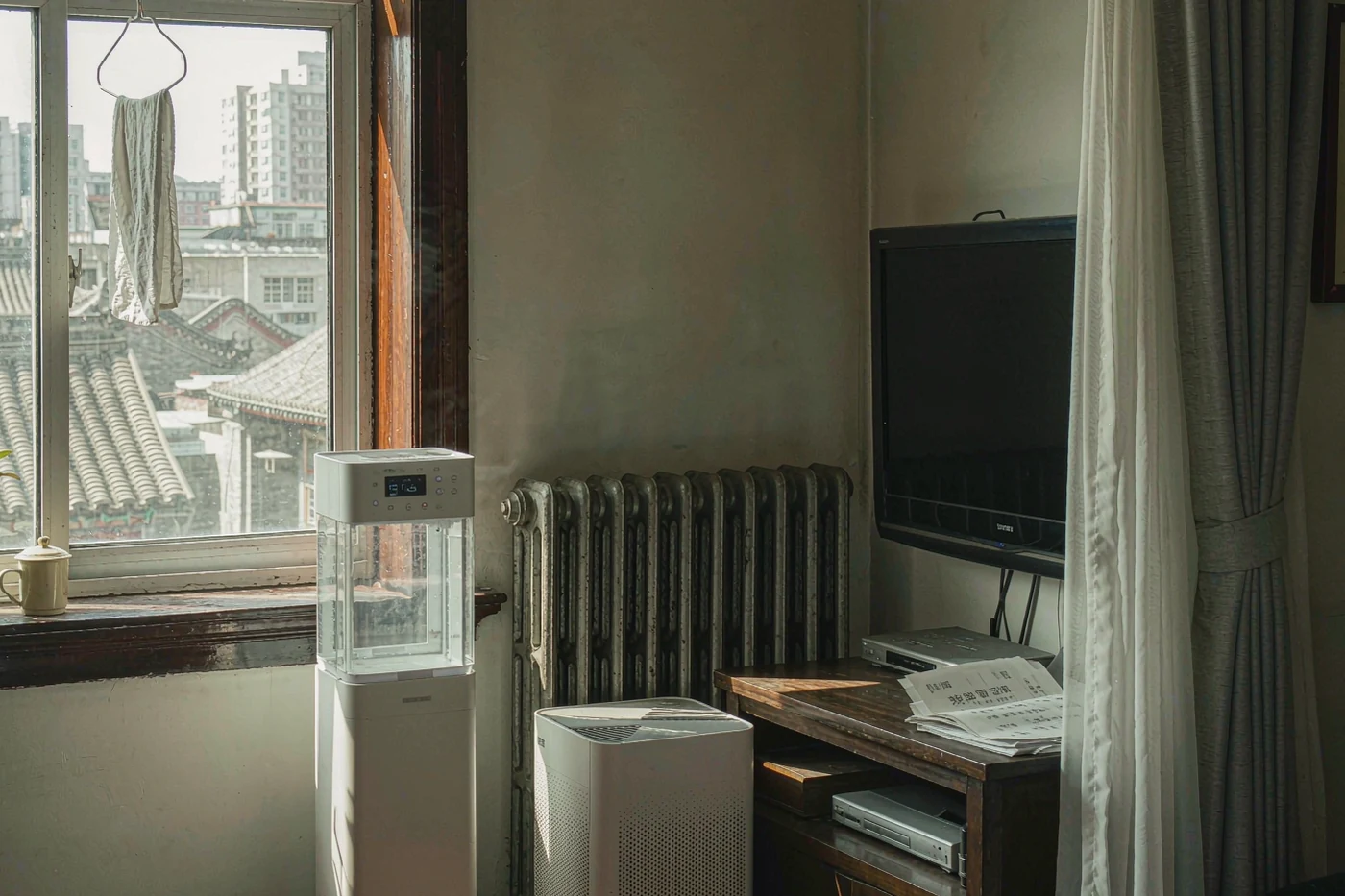
Beijing heating season drops indoor humidity to 15-20%. How to buy and safely run a humidifier or air purifier, with prices, sizing and cleaning rules.
The first week of a Beijing winter usually follows the same script for foreign visitors: you wake up at 3 a.m. thirsty, your lips crack, your skin feels tight, and static electricity zaps you on every door handle. This is not your imagination. Once the city's central heating season starts on November 15, heated rooms can fall to 15-20% relative humidity, while the comfortable range for the human body is 40-60%. Whether you are in a hotel for a week or renting an apartment for the season, this guide covers what to buy, what it costs, and how to run it without making things worse.
By law Beijing's central heating season runs from November 15 to March 15, and the city can start it earlier or extend it during cold snaps. Buildings pump hot water into wall-mounted radiators or underfloor pipes, and the municipal standard requires rooms to reach at least 18 degrees Celsius. The side effect is that every degree of heating wrings moisture out of the air. Indoor humidity in heating season commonly sits in the 15-20% range, and Beijing's tap-water-hard, windy climate makes it worse. Dry air dries out your throat and nasal passages, cracks skin, and makes colds and nosebleeds more likely.
A small digital thermometer-hygrometer costs about 10-30 yuan online and tells you whether you actually have a humidity problem and how big it is. Aim to keep indoor humidity between 40% and 60%. Below 40%, especially if you have a sore throat, nosebleeds or itchy skin, it is time to humidify. Above 60%, windows start to fog and condense, walls can go moldy near the corners, and dust mites thrive. The whole skill of winter living in Beijing is keeping the number in that band rather than just blasting a humidifier on maximum.
There are two main humidifier types you will see on Chinese shopping apps, and the difference matters more in Beijing than almost anywhere else because the tap water is hard. Ultrasonic humidifiers use high-frequency vibration to throw out a cool visible mist. They are cheap, silent and efficient, but the minerals in tap water come out with the mist and settle as fine white dust on furniture and screens. Evaporative humidifiers blow air through a wet filter and release invisible vapor; they tolerate tap water, produce no white dust, and are the safer pick for bedrooms and families with children, at a higher price and with slower humidification.
Chinese listings lead with a rating in milliliters per hour, which is the amount of water the machine can move into the air per hour. Matching that number to your room size is the single most useful thing you can do when comparing models. A machine that is too small for the room will run all day without moving the needle; one that is oversized can push humidity past 60% and fog up your windows overnight.
Beijing's health authorities publish clear rules on humidifier use, and most of the trouble people blame on machines is actually caused by skipping them. Use purified or distilled water, not tap water, and change the water every day. Clean the tank at least every three days and let it dry; mineral film and bacterial biofilm build up fast in hard water. Never add anything to the water: no essential oils, no vinegar, no perfume, and above all no antibacterial humidifier additives, which have caused serious lung injury when dispersed as mist. Point the mist away from your face and bed, and keep the area around the machine dry, since constantly damp surfaces grow mold.
Beijing's outdoor air is dramatically cleaner than it was a decade ago, and many winter days are genuinely clear. But heating-season inversions still trap pollution for stretches at a time, spring dust storms arrive without warning, and apartment kitchens and nearby restaurants push smoke indoors. A purifier is a useful second device if you are staying a month or more, you are sensitive to air quality, or you sleep with the windows shut for weeks in January. Look for a true HEPA filter (H13 grade or better) and match the CADR rating to your room; a sleep mode under about 30 decibels matters if it runs overnight.
Entry-level HEPA machines from Xiaomi's Mijia line start around 200-400 yuan for small rooms, and larger 400-800 CADR models from Xiaomi, Philips, Honeywell or domestic brands like 352 run roughly 700-1,400 yuan. Budget for the filter, not just the machine: replacement filters cost roughly 100-300 yuan and last 6-12 months depending on usage, and a saturated carbon layer can even start to smell. Check that the exact filter for your model is cheap and easy to reorder before you commit, since obscure brands sometimes strand their owners.
The fastest route is JD.com, which delivers same day or next morning across Beijing and carries every brand mentioned above; Tmall and Taobao work too but are usually a day slower. Xiaomi's own Mi Home stores are dotted around the city if you want to see and hear a machine before buying. If you are in a hotel for a short stay, buy nothing: ask the front desk first, since many Beijing hotels keep humidifiers for guests, and a wet towel hung near the radiator plus a bowl of water by the bed are the zero-cost fallbacks that hotel guests have used forever.
Renters need one extra caution: over-humidifying damages apartments. Sleeping windows closed with a big ultrasonic machine on full blast fogs the glass, and the condensation runs down into the frame and sill, where mold follows within weeks. Keep humidity at or under 60%, crack the window for ten minutes twice a day to exchange the air, and wipe window frames dry when they collect moisture. Take dated photos of walls and window sills when you move in, because deposit disputes in Beijing routinely turn on exactly this kind of damage. The heating fee is normally the landlord's responsibility for the building's central supply, but confirm it in your contract before signing.