Alipay and WeChat have no remittance button. The three legal routes for moving RMB to a US, UK or EU account - counter wires, the bank app and Wise - with the documents, fees and rules that matter.
Stay in Beijing longer than a few weeks and RMB accumulates: a salary, the refund of an apartment deposit, savings from a slow-burn trip. Moving that money home is where foreign visitors hit a wall, because the apps that handle everything else in China - Alipay and WeChat Pay - have no international remittance button at all. There are three legal routes: the bank counter, the bank's own app, and Wise. The paperwork sounds intimidating and mostly is not, but the rules differ for foreign passport holders in ways that matter, and the shortcuts people improvise carry real penalties. This guide covers which route fits your situation, the documents to assemble, what fees and delays to expect, and the mistakes that get transfers frozen. If you only have leftover cash at the end of a short trip, our leftover-money guide covers the spend-it-or-convert-it arithmetic instead - this one is about moving real sums on a legal paper trail.
China's foreign-exchange rules treat foreign passport holders differently depending on residency status, and knowing which box you fall into tells you which route is open. Under the State Administration of Foreign Exchange (SAFE) framework - the Current-Account Foreign Exchange Guidelines, 2020 edition - holders of the Foreign Permanent Resident ID Card get the same annual convenient quota as Chinese residents: the equivalent of USD 50,000 per calendar year, usable at a counter or in-app for converting RMB and sending it out. Foreigners without permanent residency do not convert salary-scale RMB through that quota. Instead, SAFE's rules let you convert legally earned RMB income against proof of source - typically an employment contract, salary statements and an individual income tax record - with no fixed cap, because the documents rather than a quota do the work. There is one more piece of good news further down the chain: under Bank of China's published rules, foreign individuals remitting foreign currency that already sits in a bank foreign-currency savings account can wire it out against a passport with no per-day amount cap [verify with your own bank]. Hard daily limits apply only to cash banknotes - around USD 10,000 equivalent per day [verify]. RMB you convert at the counter or in-app travels as funds (xianhui, 现汇), which moves at full value; banknotes you deposit carry a cash-vs-funds conversion discount.
Whatever the route, the bank wants evidence that the money is yours and legally earned. Build the folder before you need it, not the morning of the transfer:
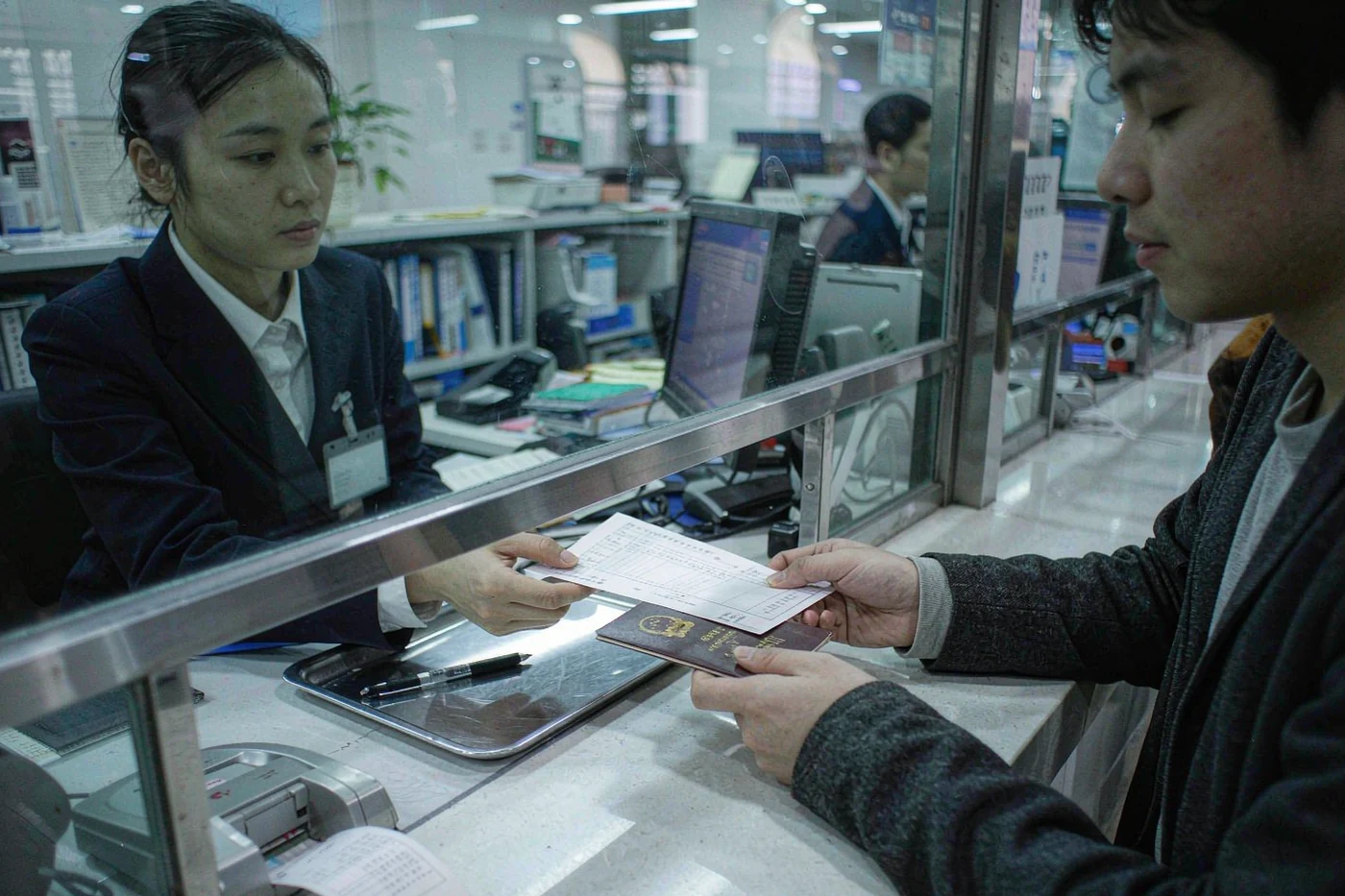
For a first remittance, plan on a staffed branch rather than the app. You will do two things in one visit: convert the RMB to the currency you need (购汇), then file the outward remittance, usually on a one-page form called the Overseas Remittance Application (境外汇款申请书). Fill it in block capitals in English, exactly as your recipient bank specifies: beneficiary name, account number, the bank's SWIFT/BIC code, and the bank's name and address. The purpose-of-remittance field matters more than people expect - declare the true purpose, whether salary savings, family support or tuition, because a mismatched declaration is a standard reason for a transfer to be held for review. All the big state banks run the service; Bank of China is the most experienced with foreign clients. Bring the whole document folder: on amounts beyond routine scale, counter staff have genuine discretion to ask for more, and it is far cheaper to hand over a contract than to book a second trip.
Once the bank knows you and the beneficiary is on file, repeat remittances can usually be done in the app - cheaper, and possible at eleven at night. The flow in Bank of China's app (ICBC and China Construction Bank are similar): open Cross-Border Remittance (跨境汇款), pick the saved beneficiary, enter the amount - the app converts RMB to dollars, euros or pounds at the live rate - choose a purpose from the dropdown, then authorise with a transaction password, face check and SMS code. Bank of China's published fee reference is a 0.1 percent handling fee (minimum 50, maximum 260 yuan per transaction) plus a 150 yuan cable charge, 80 for Hong Kong, Macao and Taiwan [verify]. The catch: many banks still require the first transfer to a new beneficiary at a counter, and any quota or source review bounces you back to a branch - so never schedule your first wire for the week you fly out.
Wise has become the long-stay favourite because it skips the SWIFT chain and shows the total cost before you commit. In the setup long-term residents report for mainland China, Wise moves legally earned CNY income to your own foreign bank account - your own account, not a third party's - with a per-transaction ceiling around 100,000 yuan and total limits tied to the income and tax you can evidence [verify: availability and limits change, so check Wise's current mainland-China page before relying on it]. You pay the RMB across by local bank transfer, and it arrives in the destination currency without correspondent-bank deductions. It will not fit every situation: you may still be asked for source documents, it is generally not for sending to other people, and for very large sums a bank wire remains the more conservative, more defensible route.
Most failed wires fail at the input stage, not at the rules. Before you go anywhere, get these details from your bank back home - their international payments page usually lists all of them:
A wire out of China can carry up to three cost layers: the remitting bank's fee (the 0.1 percent, 50-to-260-yuan pattern above), a fixed cable charge, and the one that surprises people - intermediary bank deductions of roughly 15 to 50 US dollars as the payment hops through correspondent banks [verify]. Your recipient can therefore receive noticeably less than you sent. Many banks let you choose who bears the fees; the option where the sender pays everything (known as OUR) costs more up front but guarantees the full amount lands. Wise quotes one all-in fee instead. Timing: SWIFT wires commonly arrive within one to three business days, longer if a source review is triggered or the correspondent chain is slow [verify]; Wise is usually faster. Plan around it - a wire submitted on a Friday routinely lands midweek.
The rules feel bureaucratic, which is exactly why people improvise - and every common improvisation has a documented penalty trail. Do not split a large amount across several people's annual quotas (拆分): SAFE screens for exactly this pattern, and penalties run from fines to being flagged so that every future transaction gets examined. Do not use underground remittance shops (地下钱庄) or informal WeChat-group exchangers: they operate illegally on both sides, and money routed through them is the standard way stolen funds end up in a home account. Do not buy crypto from an OTC counter and cash out abroad: the RMB side of those trades routinely touches flagged funds, and frozen cards have caught plenty of otherwise careful people. The three legal routes above work, they are documented, and the paperwork is finite - use them.
Short-stay visitors rarely need any of this: leftover banknotes and refundable deposits are the leftover-money guide's territory, and spending RMB down beats paying a wire fee on a few hundred yuan. Long-stayers drawing a local salary are the audience for the counter and app routes - print the individual income tax record while your contract is still active, not after. Holders of the Foreign Permanent Resident ID Card should simply use the 50,000-dollar quota like any local account. And if you are leaving China for good, budget two to three weeks: the final wire before departure is the one most likely to trigger a review, and you want the money arriving after you have landed, not while you are packing.