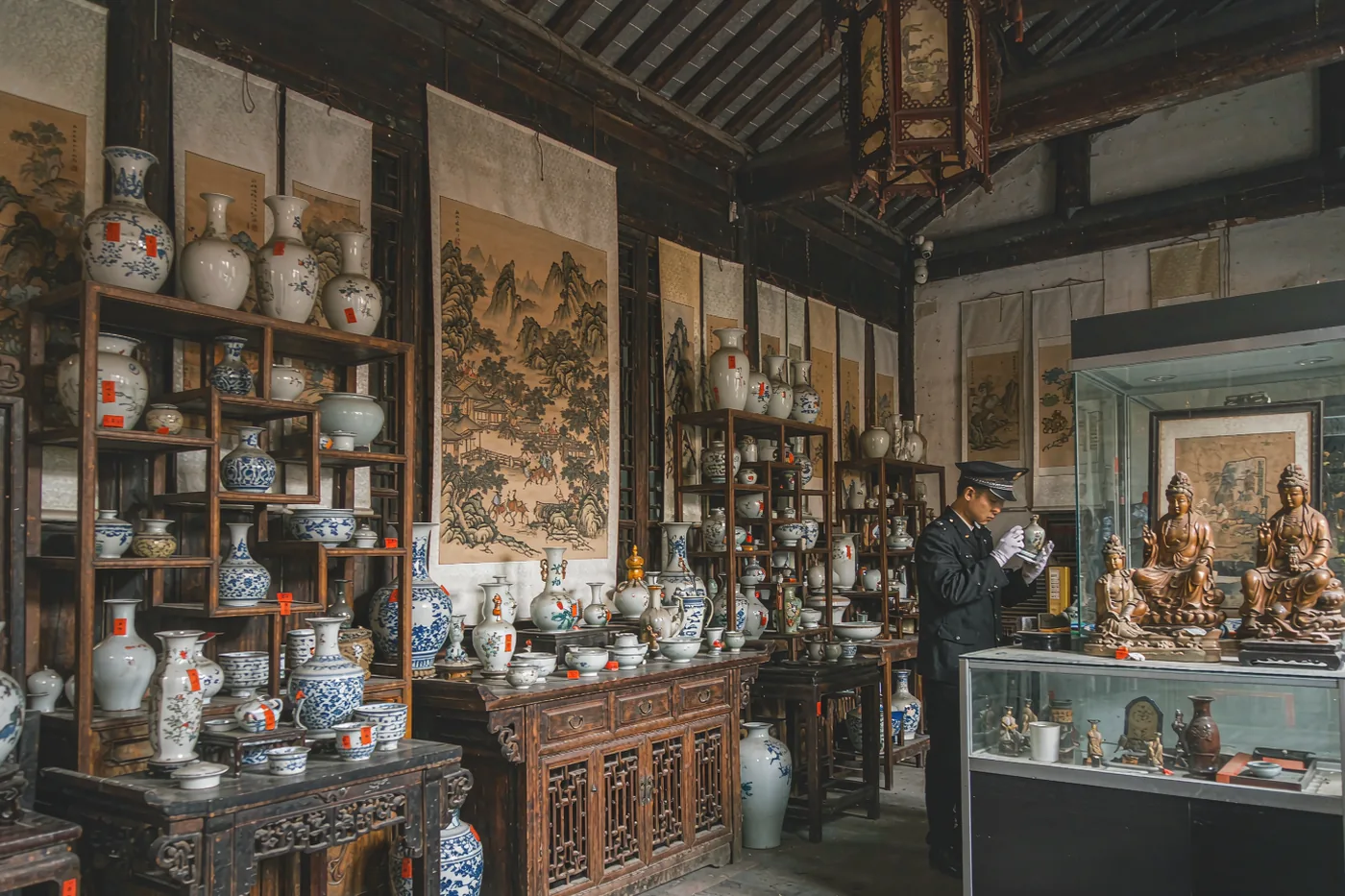
China bans most genuinely old art from leaving the country. The 1949 rule, the replica certificate path, how to apply for an export permit in Beijing and what happens if you skip the declaration.
Beijing is one of the best cities in the world to fall in love with Chinese craft - and one of the strictest places to buy it. China enforces a 'loose in, tight out' policy on cultural relics: almost anything can come in, but genuinely old things need paperwork before they can leave. Travelers get caught out every month, usually at the exit airport X-ray, because the rules are counterintuitive: a USD 30 jade bracelet from a weekend market and a Ming-era porcelain bowl are governed by the same law. This guide covers the two dates that decide everything, what customs counts as a cultural relic, the legal replica route, how to apply for an export permit in Beijing, and what actually happens if an item gets stopped.
China's export review system (the Cultural Relics Exit Review Standards, in force since 2007 and applied under the Cultural Relics Protection Law) draws two bright lines. Anything produced before 1949 (inclusive) with historical, artistic or scientific value is in principle prohibited from export. Anything produced before 1911 (inclusive) is banned outright, no matter its value - a cracked late-Qing rice bowl cannot leave, even as a gift. For artifacts of ethnic minorities the line moves earlier, to 1966. The 1949 line catches more travelers than you would guess: it covers ceramics, bronzes, jade, carved items, furniture, paintings, calligraphy, rubbings, old books and documents, textiles, coins, stamps and more - and it applies equally to foreign-made antiques found inside China. Items newer than 1949 can still be restricted if they relate to major events or famous people, or if they are works by famous deceased modern artists on the National Cultural Heritage Administration's restricted lists. When in doubt, assume an item needs review.
The review list is wider than the word "antique" suggests. Seven categories must go through review before export: artworks and crafts made before 1949; manuscripts, documents and books from before 1949; pre-1949 objects connected to social systems, production or daily life; representative post-1949 objects tied to major events or famous people; representative post-1949 objects reflecting ethnic production, customs, culture or religion; works of deceased famous modern artists and crafts people on the restricted lists; and certain fossils. The categories travelers trip over in practice are less photogenic than a bronze vessel:
Where you buy determines how easy the exit is. State-licensed antique shops (文物商店) and reputable dealers in areas like Liulichang issue proper itemized invoices, and items bought there come with paperwork that customs accepts at the exit check [verify the exact form before you buy]. Flea markets such as Panjiayuan are a different story: stalls rarely issue formal invoices, vendors will often tell you honestly that a piece is a reproduction, and genuinely old items are rare and expensive enough that you should assume they cannot simply be carried home. Whatever you buy, get an itemized receipt that states what the object is and - if the seller claims it - that it is a modern reproduction. Take clear photos of the item next to the receipt. That combination is your best evidence at the airport, and it also feeds directly into the permit application if you need one.
The good news: modern reproductions (仿品, fangpin) are legal to export, and they make up the overwhelming majority of what visitors actually buy. The catch: if a replica is well made, it looks old to an X-ray operator too. Chinese law anticipates this - replicas and reproductions of cultural relics can go through a review procedure of their own, and once approved you receive a Replica Certificate (复仿制品出境证明) with a non-transferable tag attached to the object. The application route is the same online platform used for relic permits, and the review is free. For cheap stall repros a certificate is usually unnecessary, but for a convincing porcelain 'Qing-style' vase or aged bronze statue costing real money, budgeting one trip to the review office is cheaper than losing the object at the airport.
If you genuinely want to take an old object out, there is a legal route, and it works - but it runs on bureaucratic time, so plan it at the start of your trip, not the end. The steps:
Any object you suspect might be a relic - even one with a permit - should go through the red channel (申报通道, goods-to-declare) when you exit China. Show the permit, the invoice and the object itself. Customs officers check the tag on the object against the permit and release it at the gate. If you are unsure whether an item needs a permit, declaring it costs you minutes; not declaring it can cost you the object. Checked luggage gets X-rayed too, so "packing it in the suitcase" is not a loophole - the seizure stories below all started with checked bags.
Many visitors carry heirlooms - a European pocket watch, an old jade piece bought elsewhere - and plan to take them home again. Declare them at customs when you enter China, in writing, and keep the declaration. Objects that entered undeclared are exactly the ones that get stuck at re-export: an inspector cannot tell your grandmother’s brooch from a Beijing flea-market find, and the review office process assumes you can show how the object arrived. This also covers the reverse flow: if you buy something abroad and carry it through Beijing as a transit point, keep the foreign receipts too. Declaration records, not memory, are what gets your own property back out.
Carrying or mailing cultural relics out of China without declaring them is smuggling, not a technicality. The realistic sequence at the airport: the X-ray flags an object, a customs officer opens the bag, the item goes to a state relic review office for appraisal. If it is confirmed as a prohibited or restricted relic that was not declared, customs transfers the case to its anti-smuggling department - items are confiscated, fines apply, and serious cases can escalate to criminal investigation. Even when an honest traveler merely forgot, the item does not fly with you. A 2018 case at Hangzhou Xiaoshan airport ended with 61 of 67 seized pieces confirmed as banned or restricted relics; a January 2025 case at Haikou Meilan airport started exactly the same way - one undclared bronze vessel in checked luggage. Neither traveler planned to smuggle anything. That is the point.