Your card is declined, Alipay is frozen and the hotel wants cash. Two realistic routes put money sent from home into your hands in Beijing — Western Union pickup and counter wires — with the forms, IDs and timing that decide whether it works.
Every rescue plan in Beijing quietly assumes one of your payment rails still works: an ATM that accepts your card, an Alipay balance, a WeChat wallet. This guide is for the night none of them do — the card is locked back home, the app wants a verification you cannot pass, and tomorrow's hotel bill wants cash. Two realistic routes put money that lives in someone else's country into your hands in Beijing: a Western Union pickup at a bank counter, and an international wire drawn the same way. Neither needs a Chinese phone number or a Chinese credit card, and both start with one call to someone at home.
The fix depends completely on the failure mode, and rushing to a bank before diagnosing wastes the one thing you are short of: time. Spend two quiet minutes on this triage.
Western Union remains the fastest legal way to move cash across a border into Beijing. The sender walks into any Western Union agent abroad — banks, post offices, even supermarkets — pays cash, and needs no bank account on their side. You receive a 10-digit tracking number called the MTCN, and the money is typically available for pickup within 10–15 minutes. The sender must enter your name exactly as printed in your passport — first, middle and last name, character by character — and Beijing as the city. Agree on the expected amount in advance, and ask the sender to set a test question if the option appears. One rule: the MTCN is a key, not a password to share — keep it private until you are standing at the counter.
Western Union's official China page lists five national banks that pay out transfers in person, plus several regional banks outside Beijing. The same page carries a warning worth reading twice: these agents are Chinese banks under local risk-control rules, so exact requirements vary by branch.
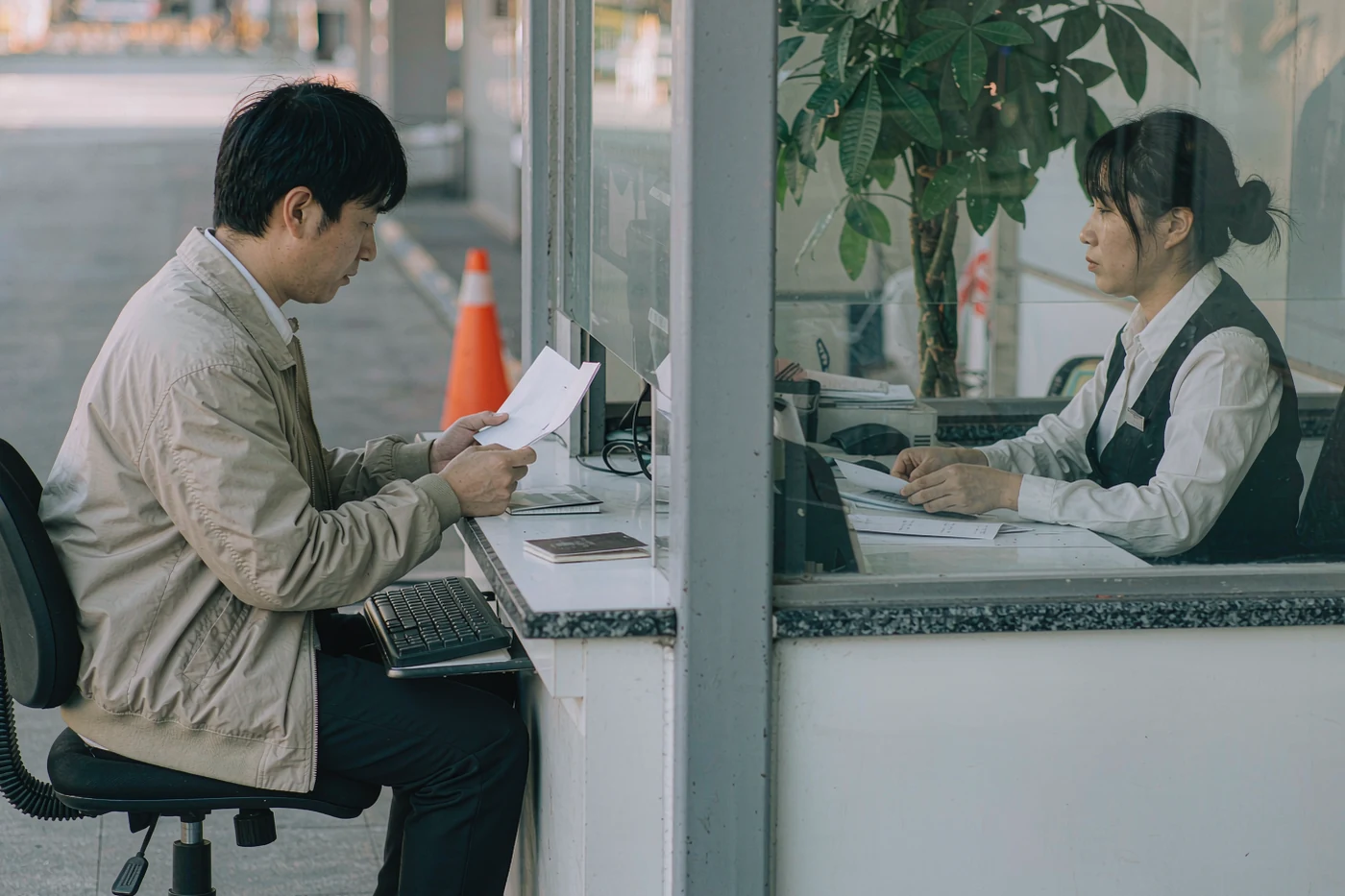
Bring your original passport — photocopies and photos are refused. At the counter you fill a Western Union receiving form (西联汇款收汇单) plus a short foreign-income declaration (涉外收入申报单); staff will point at the boxes if your Chinese is shaky. You will state the MTCN, the sender's full name, the sending country and the amount. If the spelling does not match what the sender entered, the payout is refused, so verify the name letter by letter before leaving home. Payout is a choice: take US dollars in cash, or convert to RMB at the counter rate. Everbright's own service page says receivers need no Chinese bank account; some other agents ask you to open a simple one first, which costs an extra 20–30 minutes — ask on the phone when you confirm the branch.
The receiver pays nothing — the sender's fee covered the whole journey. What the sender pays varies by country and channel; from the US, roughly US$5–50 depending on speed [verify]. Speed is the selling point: minutes after the sender pays, not days. Amount ceilings sit on the sender's side — an unverified online sender in the US is capped around US$3,000 per transfer [verify] — so a rescue amount of a few hundred dollars never runs into them. Larger pickups can trigger a short source-of-funds question at the Chinese counter; a plain sentence like family support while traveling has always been enough for routine amounts.
If Western Union does not cover the sending country, or every open branch has closed, the slow lane is a SWIFT wire into a mainland account. That presupposes you have one — if not, a basic account with just a passport is achievable in an afternoon (see our account-opening guide), and Bank of China processes inbound foreign wires most routinely. Hand the sender four things: your name in pinyin matching the passport, the account number, the bank and branch name in English, and the bank's SWIFT/BIC code. Funds take 1–3 business days and may lose US$10–40 to intermediary banks — if the amount matters, have the sender choose the OUR fee option, which puts all charges on their side.
An inbound wire lands as a foreign-currency deposit. Withdraw the dollars over the counter with your passport in hand, or settle them into RMB on the spot. The counter route bypasses ATM daily limits, and the clerk hands you exactly what arrived. Amounts beyond roughly US$5,000 equivalent can attract source-of-funds questions — bring the paperwork if yours is big; below that it is routine counter business [verify].
Bank counters open in the morning; the night before belongs to triage and preparation, not panic.